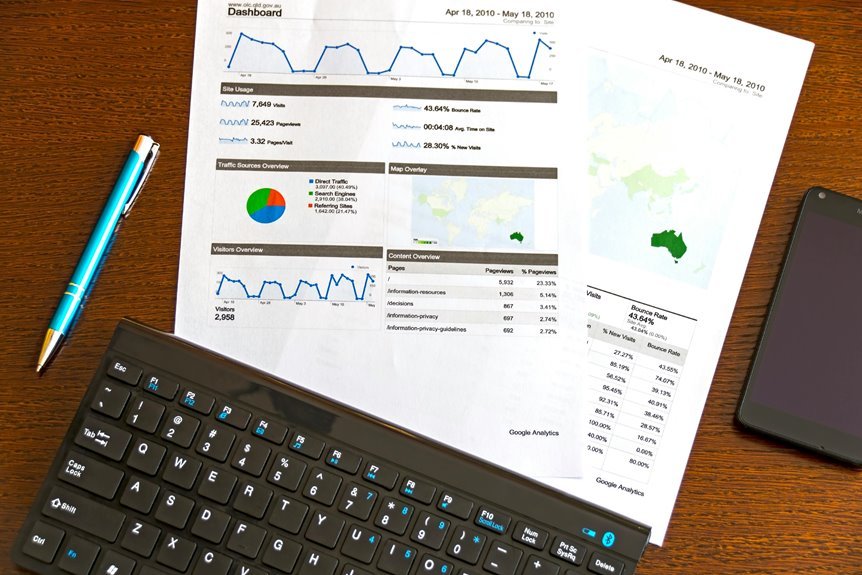
The Business Performance Dashboard serves as a crucial asset for organizations aiming to improve decision-making and operational efficiency. By integrating key metrics such as 959772249 and 18003147195, it offers real-time insights that can illuminate trends and anomalies. Customization options allow users to tailor their dashboards, enhancing relevance to specific roles. However, the effectiveness of these dashboards depends on proper implementation and understanding of best practices. What factors contribute to maximizing their potential?
Key Features of Business Performance Dashboards
As organizations strive to enhance their decision-making processes, the key features of business performance dashboards become essential tools for effective data visualization and analysis.
These dashboards aggregate performance metrics from various sources, enabling users to track progress and identify trends.
Customization Options for Your Dashboard
Business performance dashboards not only aggregate data but also offer extensive customization options that enhance their utility for various users.
Users can tailor dashboard widgets to display key metrics relevant to their specific roles, ensuring that information is both accessible and actionable.
This flexibility empowers different user roles to engage with the data meaningfully, fostering a more personalized experience that caters to diverse analytical needs.
Benefits of Real-Time Data Insights
While organizations increasingly rely on data-driven decision-making, the benefits of real-time data insights become paramount.
Real-time data visualization enhances clarity, allowing decision-makers to identify trends and anomalies promptly. This immediacy facilitates agile responses to dynamic market conditions, ultimately fostering improved strategic planning.
Best Practices for Implementing a Dashboard
Effective implementation of a dashboard hinges on a strategic approach that prioritizes user needs and organizational objectives.
To enhance user engagement, organizations must involve users in the design process and solicit feedback.
Additionally, comprehensive user training is essential to ensure proficiency and encourage adoption.
Conclusion
In a world where data flows like a river, a Business Performance Dashboard serves as a lighthouse, guiding organizations through the fog of information. By harnessing real-time insights and customizable features, companies can navigate complexities with clarity and precision. The implementation of such a dashboard not only fosters a culture of data-driven decision-making but also empowers teams to chart their course toward strategic success, transforming raw numbers into actionable narratives that drive performance forward.